Blog

Parenting Tip #9:  Be in the Moment

Parenting Tip #9: Be in the Moment

Suppose Queen Elizabeth showed up unexpectedly at your home.  How would you respond? A) Invite her in but continue to watch your Netflix. (only ten minutes left!) B) Invite her in, talk to her, but at the same time post her picture to your Instagram. 

Parenting Tip #8: Play with your Kids!

Parenting Tip #8: Play with your Kids!

Many of you know the saying:  All work and no play makes Jack a dull boy. This is true for parenting!!   All work and no play makes for very boring parents. Relax a little and take the time to really have fun with your children. 

Parenting Tip #7: Admit When You Are Wrong

Parenting Tip #7: Admit When You Are Wrong

No one wants to admit being wrong, and certainly no parent wants to remember the times when his or her parenting was less than stellar.  As parents we try hard to make good choices, but unfortunately,  there comes a day when you get it wrong.   What then?

IMG_2257

Then it’s time to man up and fess up!

Over the years, I’ve had many moments when I failed as a parent.   I have lost my temper, accused the wrong child of misdeeds, and even made up silly rules that didn’t make any sense.   Somehow my kids survived and grew up to be productive citizens.

The truth is, we all make mistakes.   It’s not like any of us have all the training we need to be perfect parents.  Luckily, you don’t have to be perfect to be a great parent.  You just have to be honest and sincere and keep trying.  

So what should a parent do when he or she blows it?   I believe that the best choice is to own up to the mistake.   There are many positive outcomes of admitting your parenting mistakes.   I’d like to focus on four:

  1. When parents graciously admit mistakes, they teach their children how to behave with civility.  Everyone needs to learn how to say “I’m sorry,” and parents’ mistakes are the perfect opportunity to teach children how to do so willingly and in a timely manner.
  2. When parents admit their mistakes, children learn to trust them.   Children eventually come to the realization that their parents aren’t as perfect as they once thought.  As children get to this stage, seeing their parents admit to falling short helps kids to recognize that their parents are honest, which leads to trust.
  3. When parents admit mistakes, children learn that everyone makes mistakes and that it’s not the end of the world.
  4. When parents admit mistakes, they become accountable for their actions.   This encourages them to evaluate those actions and enables them to make changes for the better.

Richard G. Scott talked about admitting our mistakes:   

“Admit mistakes when you make them—for we all do. Admitting your mistakes builds character and also respect. Accept full responsibility for your actions.”  

When we realize that we need to admit a mistake, there are some rules to remember.

  1. Look your child in the eye.  If the child is small, get down on their eye level to talk to them.
  2. Don’t rationalize.  Telling your kid you messed up, followed by justifying your behavior, doesn’t really send the right message.  
  3. Make amends if possible.  
  4. Be grateful there is such a thing as repentance, and be sure to allow your child the same forgiveness for his or her mistakes that you hope they allow you.
  5. Learn from the mistake.   Try to recognize why you erred and look for strategies that will help you do better next time (count to ten before reacting; ask what happened before jumping to conclusions; refrain from assuming).

No matter how hard you try, you will make parenting mistakes. It goes with the territory.

Written by Phyllis Rosen 

Parenting Tip #6:  Teach your children about Jesus Christ

Parenting Tip #6:  Teach your children about Jesus Christ

Of all the things I did as a parent, teaching my children about Jesus Christ is the one area in which I wish I’d done more.   Don’t get me wrong.   I did many things to teach my kids about Jesus Christ and the role He 

Managing Childhood Asthma

Managing Childhood Asthma

Because asthma is the most common chronic illness among children it’s important to understand managing childhood asthma. Upon this discovery many parents have a limited understanding of the disease and its treatment, which is the exact information parents need to know and utilize to keep 

Parenting Tip #5: Work Ethic

Parenting Tip #5: Work Ethic

Teach Your Children to Work

Hi-ho, hi-ho, it’s off to work we go…

In Snow White and the Seven Dwarfs, the dwarfs sing cheerfully with their shovels in hand as they march off to work in the mines.  This probably is not the way your children march off to complete their chores.   More often the mention of chores brings groans and grumblings.  Yet teaching children how to work (and the value of work) is important.

“Teaching children the joy of honest labor is one of the greatest of all gifts you can bestow upon them. Let us also teach our children to see that the work assigned is carried to its completion and to take pride in what they accomplish.”     L. Tom Perry

This begs the question: how can we teach them to work and to take pride in their work?  I will be the first to admit that this was not my strong suit in parenting.  I tried all different kinds of charts, but they only worked for a short period of time, then I’d have to try something new.  I did, however, discover something over the years.

Rosen 1994 635

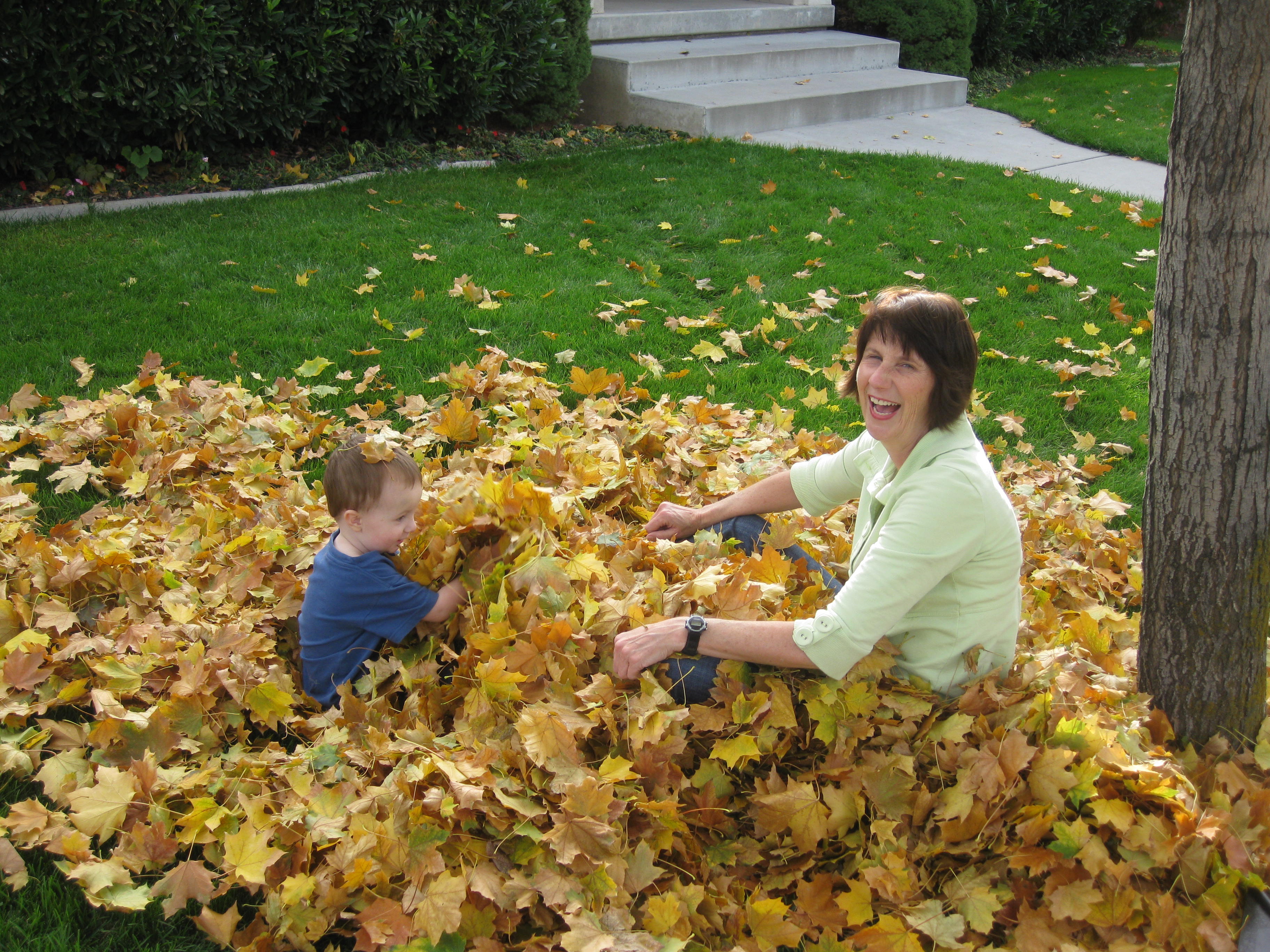
Little children actually come with a love of working.  My grandson (McKoy) is 1 ½ years old, yet every time he sees a broom he tries to sweep.  When I start dusting, he wants to follow along with his own dust cloth.  Another grandson (Griffin) is 6 and he loves every opportunity to join in my chores.  If I’m raking leaves, he’s right there; if I’m mopping the floor, he’s begging me to let him do it; if I’m baking, he wants to measure, add, and stir.  

I think that children are born with a desire to produce good works.   

The key is to capitalize on that desire while children are young, then gradually expand their work loads as their abilities and skills increase.  Making assignments around the house when they are small prepares them for outside jobs as they mature.

When our two oldest boys were about 10 and 12, they got a paper route.   This was just a weekly journal that they delivered to a neighborhood near us.   It wasn’t hard work, but it did require getting the job done on a specific day by a specific time.  The pay was not great, but they didn’t need a lot of pay at that age.  Best of all, my boys learned that  work comes before play because deadlines don’t wait.

Our fourth child decided to get a job at age fourteen.   He walked over to the horse boarding facility near our house and applied for a job—and got one!!   As our other children became old enough, we encouraged them to find jobs.    Our encouragement paid off (literally) for our youngest son when he started mowing lawns in the neighborhood.  He was able to make more per hour than he could have at a regular job.  Plus, he had the benefit of setting his own schedule, so he learned time management.  

366

Our youngest daughter started working at age 14.   She spent two years at a water park, then at age 16 started working at a grocery store, a job she held until she graduated from college.  Having a long-term job enabled her to learn some skills beyond the basics of showing up for your shift.   She learned  how to get along with people who have different work ethics, the give-and-take of substituting for others so you can get the same in return, the benefit of friendliness and customer service, and most of all, how to stick with it when you are tired of the routine.

So how did we get them to work? We set the example.  Throughout their growing years, my husband and I both worked in the yard and around the house, and we made sure our kids had the opportunity to work beside us.  Did they love it?  NO!   As they got older, they found they would much rather go off with friends, or hibernate in their room, or do almost anything rather than plant the garden, hoe the weeds, or clean the house. But we persevered (consistency!!!).

We tried hard to ensure that their efforts were appreciated and that they had challenging jobs.  

Twice I repainted the entire house.  The first time my son Stan helped me paint; the second time my daughter Kim worked beside me.   These were hard jobs.  After we were done, when someone came to the house and commented on the new paint job, I made sure I let them know that Stan/Kim had been major players in the home improvements.   

236Because I have four boys—all tall and strong—my neighbor would call and ask if she could hire them to do some work for her.  After the first couple of times, she began calling them regularly, explaining that she liked calling these boys because she knew they would work hard and get the job done.   This type of feedback helped them to be proud of their work ethic and pushed them to work in a way to hold on to that reputation.

Kids need to know that they have the ability to contribute to the family through their work.  Every time I did a task myself because it was easier or faster, I sabotaged their growth.  Even though they didn’t always do things to my standard (think raggedy mown lawns), they did share the workload.   And that’s worth a lot!

I love quotes that explain ideas briefly and often with humor.   Here are some of my favorites regarding work:

  • “Every job is a self-portrait of the person who does it.   Autograph your work with excellence.” (Author unknown)
  • “People are born with brains and sometimes with money, but work ethic levels the playing field.” (Ryan Holmes)
  • “Hard work spotlights the character of people:  some turn up their sleeves; some turn up their noses; and some don’t turn up at all.”  (Sam Ewing)
  • “Talent is cheaper than table salt.  What separates the talented individual from the successful one is a lot of hard work.”  (Stephen King)

The only way to get kids to internalize these ideas—that work makes the difference—is through experience.   As they learn to work at home and at school, they will begin to see the reward. Once they realize the benefits, they will become self-motivated workers.

Written by Phyllis Rosen
Expressing Gratitude

Expressing Gratitude

“Keep the Commandments” The Thanksgiving holiday is a time to express thanks for the many blessings we have been given. A time to pause, reflect, and notice blessings that we may not otherwise recognize. A time to express our love for our Savior and our Heavenly 

Dating & Serious Relationships

Dating & Serious Relationships

I’d personally love to tell you all about how great all my relationships have been going and what the biggest successes and positive signs are . . . and I’ll still be glad to share. However, I’m coming from a unique perspective at this time. 

Parenting Tip #4: Support Your Spouse

Parenting Tip #4: Support Your Spouse

As my husband and I were discussing parenting (we often do) we realized that a large part of parenting is supporting your spouse. You may wonder “what does that have to do with parenting? Turns out it plays a large role.

There are many ways to show support to your spouse:

  1. Being there for big moments 
  2. Upholding the rules set by partner
  3. Recognizing when help is needed and giving it
  4. Being happy for each other’s successes.
  5. Listening to the problems/triumphs
  6. Bragging about spouse to others
  7. Touching:  a hand squeeze, a hug, a high-five

Parenting is a tough job.  It takes time, hard work, perseverance, patience, creativity, and divine help.   When you feel overloaded or alone, it’s hard to endure through the tough moments (yes, everyone has tough moments).  I’ve found that the only way to get through it is to have support.   Unless you are a single parent (a topic for another day), that support ought to come from your spouse.  

These moments of support are not time-consuming or costly. It can be as simple as Rosen 2011 1277walking in the door at night and giving your spouse a hug.  It might mean showing up to his or her presentation, performance, or work party. It could even be as easy as asking “What can I do for you today?”  One of the best ways to support your spouse is by continuing to “date” each other.  Taking the time to do fun things together allows you to remember why you got married in the first place.   Weekly dates keep the fires of romance burning and they help you remember that there is more to life than parenting!

Rosen 2011 1023

Over the years, my husband has given me tremendous support. When I held piano recitals, my husband would always be there early to hand out the programs—a huge show of support since it meant he had to leave work early.  He would also hand out treats after the recital, allowing me time to visit with the parents of my students.

But how does this help our parenting? Happy spouses make for happy parents. When you know your efforts are appreciated, or even noticed, you feel valued as a person. Feeling valued as a person allows you to focus on others—the kids—and not yourself.

Another part of being supportive is being willing to sit down together and come up with a parenting plan.  Although you can’t cover every possible circumstance, you can set some guidelines for yourselves that put you and your spouse on the same parenting page.  When parents take the time to do this, something wonderful happens.  The kids soon realize that their parents are a team.   The kids will not be able to manipulate or pit the parents against each other.  (If you don’t think kids do this, you don’t have kids yet!)  This is a big step in positive parenting! Even though kids express the idea that they wish they could pit one of you against the other, the truth is that if they know the parents are united, they feel secure and confident.

IMG_1766If your parenting feels disjointed, if you feel alone even though you have a spouse, if you need encouragement or recognition, now is the time to take your honey on a date, sit down somewhere, and discuss how you can support each other in ways that matter to the two of you.  Your kids will thank you for it later.   


Written by: Phyllis Rosen

Strengthening Family: Plan of Salvation

Strengthening Family: Plan of Salvation

Before we were born we all lived with God. Genesis 1:27 says, “God created man in his own image, in the image of God created he them; male and female created he them.” Thus, men and women were created, spiritually first, as God’s own offspring—spirit